

DEFINITION
A Dog Walking Rate Increase is a planned adjustment to your dog walking service pricing that reflects business cost increases, market rate changes, service improvements, or fair compensation for your experience and expertise. Rate increases are normal business practices that maintain profitability, ensure sustainability, and allow continued quality service delivery to clients.
Learn how to tell clients you’re raising your dog walking rates + free email templates to help you get started today.
KEY TAKEAWAYS
- Annual rate increases are industry standard: Raising rates 3-10% annually is expected and accepted by clients when properly communicated, keeping your pricing aligned with inflation, increased business costs, and your growing expertise.
- Timing and notice period matter critically: Provide 60-90 days advance notice for rate increases, implement changes at natural transition points (New Year, your business anniversary, or seasonal shifts), and never surprise clients with unexpected charges.
- Confident communication prevents client loss: Most client pushback results from unclear communication, not the increase itself, clearly state the new rate, effective date, and brief reason without apologizing or over-explaining your business decision.
- Grandfather strategies can ease transitions: Offering existing clients a grace period (30-90 days at old rates), discounted transition rates, or loyalty pricing maintains relationships while still achieving necessary rate adjustments over time.
- Losing price-focused clients is healthy: Clients who leave over reasonable rate increases are typically not your ideal clients, they’re price-focused rather than value-focused, and losing them creates capacity for clients who appreciate and fairly compensate your services.
Why Raising Your Rates is Essential (Not Optional)
If you haven’t raised your dog walking rates in over a year, you’re actually giving yourself a pay cut. Here’s why: inflation erodes purchasing power, business expenses increase (gas, insurance, supplies), your experience and skills have grown, and market rates evolve. Standing still means falling behind.
Many dog walkers avoid rate increases because they fear losing clients. This fear keeps them trapped in unsustainable pricing that leads to resentment, burnout, and ultimately business failure. The truth is, reasonable rate increases communicated properly result in minimal client loss, typically 5-10% or less, and those who leave are usually your most demanding, least appreciative clients anyway.
Professional service providers across all industries raise rates regularly. Your clients experience rate increases from their hair stylists, dentists, gyms, streaming services, and every other service they use. They understand and expect it. The key is communicating increases confidently and professionally.
When to Raise Your Rates
Don’t wait until you’re desperately underpaid and resentful. Raise rates proactively based on these triggers.
Annual Increases
Best practice: Implement small, consistent annual rate increases rather than infrequent large jumps. A 5% annual increase is easier for clients to absorb than a 20% increase every four years.
Timing options:
- January 1 (New Year’s is the most popular and expected time for rate changes)
- Your business anniversary month
- The start of your busy season
- The beginning of a new quarter
Triggered Increases
Raise rates when:
- Your expenses increase significantly (insurance, gas, equipment)
- You add new services or certifications
- You’re consistently fully booked (demand exceeds supply)
- You’ve gained significant experience (after 1 year, 2 years, 5 years milestones)
- Market research shows you’re underpricing compared to competitors
- You’re working more hours but earning less (efficiency problems)
- Client demands have increased without compensation
- You realize you’ve been undercharging since starting your business
How Much to Increase
Conservative approach: 3-5% annually (tracks with inflation, minimal client resistance)
Standard approach: 5-10% annually (keeps pace with market growth and skill development)
Catch-up approach: 10-25% for significantly underpriced services (implement gradually or all at once with strong justification)
Calculate your increase:
- Current rate: $25 per walk
- 5% increase: $25 × 1.05 = $26.25 (round to $26)
- 10% increase: $25 × 1.10 = $27.50
- 15% increase: $25 × 1.15 = $28.75 (round to $29)

How to Communicate Rate Increases
The way you communicate matters more than the increase amount. Here’s how to do it right.
Rule #1: 🟢 Be Confident and Direct
Don’t apologize, over-explain, or act sheepish about raising rates. You’re making a normal business decision that every professional service provider makes regularly.
Confident: “Starting January 1st, my rate for 30-minute walks will be $28.”
Not confident: “I’m so sorry, but I hate to tell you this, and I feel terrible about it, but unfortunately I have to raise my rates a little bit because my costs went up and I really need to, so I hope you understand…”
Rule #2: 🟢 Provide Adequate Notice
Minimum: 30 days advance notice Standard: 60 days advance notice
Best practice: 90 days advance notice
Longer notice periods show respect for clients’ budgets and planning needs. They also give you time to address concerns and allow emotional reactions to settle.
Rule #3: 🟢 Put It in Writing
Always send written notice, even if you mention it in person first. Written communication provides documentation, ensures everyone receives identical information, and gives clients time to process without pressure to respond immediately.
Rule #4: 🟢 Keep It Simple
Your rate increase announcement should include:
- New rate amount
- Effective date
- Brief reason (1-2 sentences maximum)
- Appreciation for their business
- How to contact you with questions
That’s it. Don’t write a novel. Don’t justify every expense. Don’t over-explain.

Email Templates for Rate Increases
Have you been putting off raising your dog walking rates because you don’t know what to say?
You’re not alone, and that’s exactly why I created these 7 free dog walking rate increase email templates. They’re designed to help you communicate a price increase clearly, professionally, and without sounding apologetic or unsure.
Instead of staring at a blank screen or over-explaining yourself, you can use proven wording, personalize a few key details, and send with confidence. These templates work especially well when paired with a clear next step, whether that’s directing clients to learn more about your services, understand your experience, or use a dog walking rate calculator to see how pricing should actually be structured.
They take the emotional weight out of the conversation and help you start charging in a way that reflects the real value of your work.

👉 I Want These Email Templates →
How to Handle Client Objections
Despite perfect communication, some clients will pushback. Here’s how to respond professionally.
Objection: “This is too expensive.”
✅ Response: “I understand budget is important. My new rates reflect current market standards for professional dog walking services in our area. If the new rate doesn’t fit your budget, I’m happy to discuss alternatives like [reducing frequency, shorter walks, or referrals to other providers]. What would work best for you?”
Objection: “Why didn’t you tell me sooner?”
✅ Response: “I sent notification on [date], which provided [number] days advance notice. I apologize if you missed that email, I know inboxes can be overwhelming! The new rate takes effect [date], so you have [remaining time] at the current rate. Is there anything I can clarify about the change?”
Objection: “My previous dog walker only charged $15!”
✅ Response: “Every business structures pricing differently based on their experience, services, insurance coverage, and business costs. My rates reflect [your certifications, experience level, insurance, services included]. I’m confident the value I provide matches the investment. However, if my services don’t fit your budget, I’m happy to recommend other qualified walkers who may have different rate structures.”
Objection: “Can you make an exception for me?”
✅ Response: “I appreciate you asking, but I maintain consistent pricing for all clients to ensure fairness. However, I do offer [payment plans, package discounts, referral credits, or loyalty programs]. Would any of those options help?”
Objection: “I’m a loyal client – don’t I get a discount?”
✅ Response: “I absolutely value your loyalty! That’s why I provided [notice period] advance notice and [any loyalty consideration you’re offering, like grandfathering or transition rates]. My new rates apply to all clients to ensure fairness, but I’m committed to continuing the excellent service [Dog Name] deserves.”
Objection: “I can’t afford this. I’ll have to find someone else.”
✅ Response: “I completely understand, and I appreciate you being honest about your budget constraints. I’d be happy to provide referrals to other qualified dog walkers who might better fit your budget. I’ve truly enjoyed caring for [Dog Name], and I wish you both the very best!”
Grandfather Strategies to Ease Transitions
Grandfathering rewards loyal clients while still achieving necessary rate increases.
► Full grandfather: Existing clients permanently keep old rates while new clients pay new rates (not sustainable long-term)
► Timed grandfather: Existing clients keep old rates for 3-6 months, then transition to new rates
► Partial grandfather: Existing clients pay lower rates than new clients permanently (new clients $30, existing $28)
► Gradual increase: Existing clients’ rates increase in steps ($25→$26→$27→$28 over 6-12 months)
► Loyalty tier: Create tiers based on tenure (1+ years get $27, 2+ years get $26, etc.)
Implementation Timeline
► 90 days before: Send initial rate increase announcement
► 60 days before: Send reminder email
► 30 days before: Final reminder and offer to answer questions
► 2 weeks before: Personal check-in with any clients who haven’t acknowledged
► Implementation date: New rates take effect
► 30 days after: Check in on any clients who seemed uncertain
What to Do When Clients Leave
Some clients will leave over rate increases. This is normal and healthy for your business.
🟩 Expected loss rate: 5-15% of clients for reasonable increases
❌ Don’t: Chase them with discounts, apologize excessively, or take it personally
✅ Do: Thank them for past business, offer referrals to other providers, leave the door open for their return
👉 Remember: Clients who leave over fair rate increases are price-focused rather than value-focused. They’re often your most demanding, least appreciative clients. Their departure creates space for ideal clients who value and fairly compensate your work.
After Your Rate Increase
► Document everything: Track which clients accepted increases, which asked questions, and which left
► Analyze results: Calculate actual client loss percentage vs. feared loss
► Fill vacancies: Market to attract new clients at your new, proper rates
► Maintain confidence: Don’t waffle or offer old rates to new clients
► Plan next increase: Set calendar reminder for next annual increase announcement
Building Confidence in Your Pricing
If you struggle with rate increase anxiety, try these mindset shifts:
🟩 Reframe: This isn’t “charging more”, it’s “being fairly compensated”
🟩 Reality check: Calculate your actual hourly wage after expenses. You’ll likely realize you’re underpaid.
🟩 Market research: Knowing you’re priced below competitors builds confidence
🟩 Value inventory: List everything you provide beyond basic walking (GPS tracking, photos, communication, flexibility, experience, insurance, etc.)
🟩 Client feedback: Remind yourself of positive testimonials and reviews
🟩 Financial goals: Connect rate increases to personal goals (saving for house, paying off debt, building emergency fund)
Final Thoughts
Raising your dog walking rates is not just acceptable, it’s essential to building a sustainable business. Your experience has value. Your time has worth. Your services deserve fair compensation.
The clients who truly appreciate your work will absorb reasonable rate increases without hesitation. Those who won’t are sending you a clear message: they don’t value your service enough to pay fair market rates. That’s valuable information, and their departure makes room for clients who do appreciate you.
Communicate your increase clearly, confidently, and professionally. Provide adequate notice. Offer payment options if appropriate. Then hold firm. You’re not running a charity, you’re operating a business. Price accordingly.
Your future self will thank you for having the courage to charge what you’re worth.
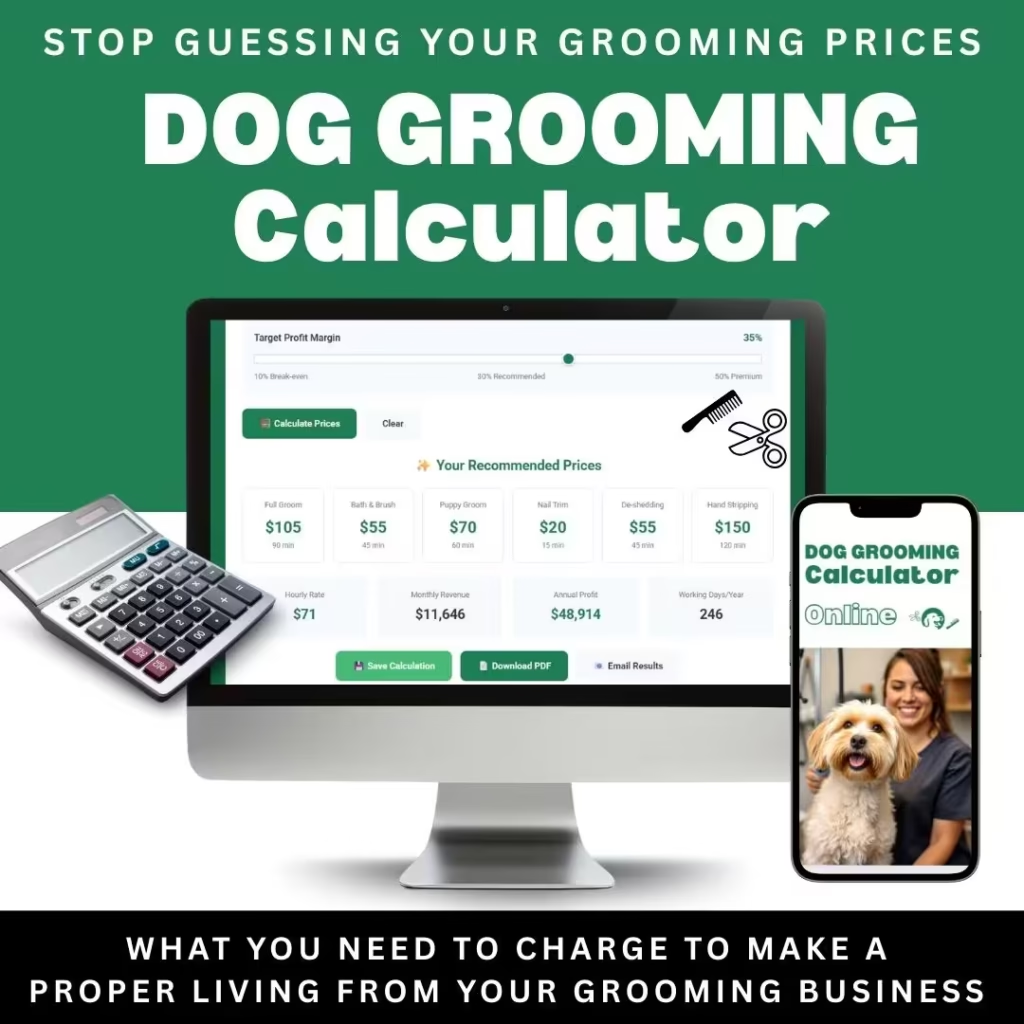
Free Resource: Dog Walking Rate Calculator
Take the guesswork out of pricing with this free calculator:

✅ See recommended prices for all your services
✅ Calculate your true hourly rate
✅ View break-even pricing at different capacity levels
✅ Get annual revenue and profit projections
Try the Free Dog Walking Rate Calculator Today! →



Have questions about pricing your grooming services? Drop a comment below or reach out — I’d love to help!
Share this post:
Know a dog walker who needs to see this? Share it with them!
FAQ: New Groomer Pricing Questions
How often should I raise my dog walking rates?
Most dog walking professionals raise rates annually, typically implementing increases at the beginning of the calendar year, though some choose their business anniversary or seasonal transitions. Annual increases of 3-10% are industry standard and expected by clients. Small, consistent annual increases are easier for clients to absorb than large, infrequent jumps, for example, a 5% annual increase is more palatable than a 20% increase every four years. .
How much notice should I give clients before raising rates?
Provide minimum 60 days advance notice, though 90 days is best practice for maintaining positive client relationships. This timeframe shows respect for clients’ budgets, allows them to adjust their finances, gives emotional reactions time to settle, and demonstrates professionalism. Send written notification via email and follow up with reminders at 60 days, 30 days, and 2 weeks before the increase takes effect. Never surprise clients with rate increases on invoices or day-of service. The only exception is new clients who should learn your current rates immediately, never quote old rates to new clients even if existing clients are grandfathered.
What if all my clients refuse the rate increase and cancel?
This scenario is highly unlikely if you’re implementing reasonable increases with proper communication. Typical client loss from fair rate increases is only 5-15%, and those who leave are usually your most price-sensitive, demanding clients whose departure actually benefits your business.
If you experience mass cancellations, reassess whether your increase is aligned with market rates (research competitors), your communication was clear and professional, your service quality justifies the price, and you’re in an extremely price-sensitive market.
👉 Remember that replacing departing clients with new clients at proper rates is easier than keeping undervalued long-term clients who resent paying fair prices.
Should I raise rates for all clients or just new ones?
The fairest approach is raising rates for all clients simultaneously, though with longer notice periods for existing clients out of courtesy. Maintaining different pricing tiers long-term creates administrative headaches, resentment when clients discover discrepancies, and devalues your services to new clients.
However, short-term grandfathering strategies can ease transitions, for example, existing clients get 3-6 months at old rates or permanently pay slightly less than new clients ($27 vs $30).
How do I raise rates if I signed a contract with fixed pricing?
Review your contract terms carefully. Most service contracts include language allowing rate changes with proper notice, specify contract duration and renewal terms, or include annual rate escalation clauses. If your contract locks in rates without change provisions, you must honor those rates through the contract term.
However, you can provide advance notice that renewal will be at new rates, offer contract amendments if clients agree, or decline to renew contracts that expire.
🟢Going forward, ensure all new contracts include rate change language like “Rates subject to change with 60 days written notice” or annual escalation clauses like “Rates may increase up to 5% annually at anniversary date.”
What if a client says they’ll pay the increase but then disputes the charge later?
Prevent this by documenting everything. When a client confirms acceptance of the new rate, send written confirmation via email:
“Thank you for confirming you’ll continue service at the new rate of $28 effective January 1st. I’m attaching your updated service agreement reflecting the new pricing. Please keep this for your records.”
Have clients sign updated service agreements or e-sign through booking software. Save all emails confirming rate acceptance. If disputes arise despite documentation, calmly reference the written confirmation:
“As we discussed via email on [date], the new rate of $28 took effect [date]. I have your confirmation saved if you’d like me to forward it again.”
🟩 Stand firm, don’t waive charges to avoid conflict.
Can I raise rates mid-contract or do I have to wait until renewal?
This depends on your contract language. If your contract includes a rate change clause allowing increases with proper notice, you can raise rates mid-contract as long as you follow the notice requirements. If your contract specifies fixed rates for the contract duration with no change language, ethically and legally you should honor those rates until renewal or expiration.
However, you can propose a contract amendment: “I’m implementing new rates effective [date]. Your current contract runs through [date] at $25. I’d like to offer you an amended agreement at $27 (below my standard new rate of $28) effective immediately. Would you prefer to continue at $25 through [contract end date] then move to $28, or accept $27 now?” Give them options and document their choice.
About Pawpreneur Suite
We build tools and resources to help pet care professionals run profitable businesses. From pricing calculators to client management tips, we’re here to help you succeed.