
How to Turn Dog Walking Inquiries Into Paying Clients
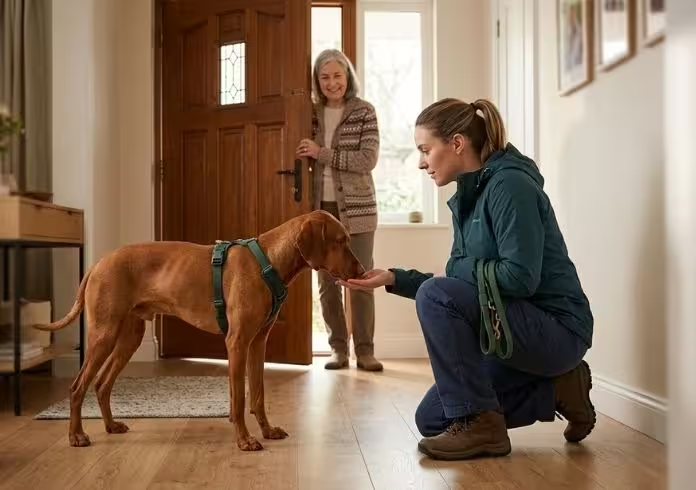
Someone has just messaged you. They found your flyer at the vet, spotted your card at the groomer, or got your number from a friend. They want to know about your dog walking services.
This is the moment most dog walkers underestimate.
What happens in the next few hours, and the next few days, will determine whether that person becomes a long-term paying client or disappears to book with someone else. And the difference between those two outcomes is rarely about price. It is almost always about how the enquiry was handled.
Most dog walkers respond to enquiries casually, in the same way they would reply to a friend. A quick answer to whatever question was asked, a price if they were asked for one, and then silence while they wait to see what happens. This approach loses a significant number of leads that were genuinely interested and genuinely convertible.
This guide walks you through a simple, repeatable enquiry process that turns more of your incoming messages into confirmed bookings without any pressure, scripts, or uncomfortable sales tactics.
KEY TAKEAWAYS
- Responding to a new enquiry within the first hour dramatically increases your chance of converting that lead into a paying client before they contact someone else.
- The goal of your first response is not to close a sale but to build enough trust and warmth that the potential client wants to take the next step with you specifically.
- A structured meet and greet process, presented confidently as a standard part of how you work, signals professionalism and gives the lead a clear, low-risk path toward booking.
- Following up with a lead who has gone quiet is not pushy, it is professional, and a single well-timed follow-up message recovers a significant number of enquiries that would otherwise be lost.
- Every part of your enquiry process, from your first reply to your post-meet-and-greet message, either builds or erodes the trust that determines whether someone books with you.
Why Good Dog Walkers Lose Enquiries
Before getting into what to do, it helps to understand why enquiries go cold. It is rarely because the potential client found someone cheaper or decided they did not need a walker after all. The most common reasons are:
- Slow response time. Pet owners sending enquiries are often in an active decision-making moment. If they do not hear back within a few hours, they message the next walker on their list. By the time you reply, they have already moved on.
- Incomplete first responses. Answering only what was asked and nothing more leaves the potential client with more questions and no clear next step. They have to do all the work of moving the conversation forward, which many people simply will not bother doing.
- No warmth or personality. A dry, purely factual response to an enquiry from someone who is about to trust you with their dog misses the emotional dimension of the decision. Pet owners are not just buying a service. They are choosing a person.
- No follow-up. Most dog walkers send one response and then wait indefinitely. If the lead does not reply, the opportunity is treated as lost. In reality, a single friendly follow-up message recovers a significant number of warm leads.
- No clear next step. If your response does not include a specific invitation to take the next step, whether that is a meet and greet, a quick call, or a visit to your booking page, the lead has nowhere obvious to go.
Each of these is a simple, fixable problem. Address them one by one and your conversion rate will improve noticeably.
Step One: Respond Fast
Speed is the single highest-impact variable in enquiry conversion. Research into service business lead response times consistently shows that responding within the first hour dramatically increases the likelihood of converting the lead compared to responding several hours later. Responding the next day, which is common among solo dog walkers managing their own admin, significantly reduces your chances further.
This does not mean you need to be glued to your phone between walks. It means:
- Setting up an auto-reply on Instagram and Facebook that acknowledges the message immediately and tells the person when to expect a personal response. As covered in the Digital Concierge series on PawPreneur Suite, a well-written auto-reply keeps the conversation warm during the gap.
- Checking messages during natural breaks in your day, at the end of a walk, over lunch, or between appointments, rather than leaving them until the evening.
- Treating new enquiries as a priority response in the same way you would treat an urgent call from an existing client.
If you genuinely cannot respond quickly during your working hours, set clear expectations. An auto-reply that says “I am out on walks until 2pm but will reply personally as soon as I am back” is honest, warm, and keeps the lead engaged. Silence is what loses them.
Step Two: Write a First Response That Does More Than Answer the Question
Most enquiries open with a simple question. “How much do you charge?” or “Do you have availability on weekday mornings?” or “Can you tell me about your services?”
A weak first response answers only what was asked. A strong first response answers the question and does three additional things:
It adds warmth and personality. A brief, genuine line about why you love what you do, or a specific acknowledgment of the dog’s name or breed if the client mentioned it, makes the response feel personal rather than transactional.
It provides a little more than they asked for. If they asked about price, give the price and then briefly mention what is included, how the service works, and what makes your approach different. Not a wall of text but two or three sentences that move the conversation forward.
It ends with a clear, specific invitation to a next step. Do not leave the conversation open-ended. Close every first response with a specific invitation.
Here is an example of a strong first response to a pricing enquiry:
“Hi Sarah, thanks so much for getting in touch! Solo walks are $25 for 60 minutes and I cover [your area] every weekday. I always do a free meet and greet before the first walk so I can meet your dog properly and make sure we are a good fit. I have availability this week if you would like to set something up. What days work best for you?”
That response answers the question, adds context, introduces the meet and greet, and ends with a specific question that moves the conversation forward. Compare it to “Solo walks are $25 per hour. Let me know if you want to book” and the difference is clear.
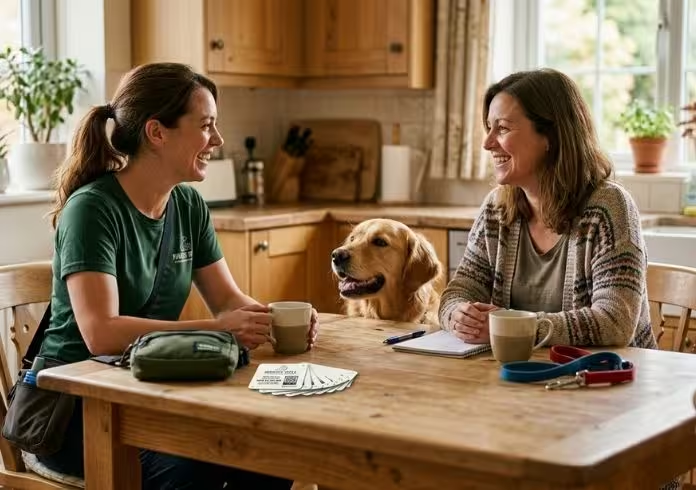
Step Three: Position the Meet and Greet as Standard, Not Optional
The meet and greet is your most powerful conversion tool and most dog walkers underuse it.
Many walkers treat the meet and greet as something offered only if the client asks for it, or present it tentatively as if it might be an inconvenience. This is a missed opportunity. The meet and greet should be positioned as a standard, non-negotiable part of your onboarding process, one that every new client goes through before their dog’s first walk.
Here is why this matters for conversion:
- It removes the biggest barrier to booking, which is the fear of handing a dog to a stranger. Meeting you in person and seeing how you interact with their dog resolves this fear in a way that no amount of messaging can.
- It positions you as thorough and professional rather than casual. A walker who insists on a meet and greet before starting signals that they take their work seriously.
- It gives you the opportunity to demonstrate your expertise, your warmth, and your genuine interest in the dog, all of which are far more persuasive than any written description of your services.
When you introduce the meet and greet in your first response, present it as simply how you do things:
“I always do a free meet and greet before the first walk. It gives me a chance to meet your dog, go through any questions you have, and make sure everything is set up properly before we get started.”
No hesitation. No asking whether they would like one. It is just part of your process.
Step Four: Prepare for the Meet and Greet Like a Professional
Getting the potential client to agree to a meet and greet is only half the job. What happens during it determines whether they walk away ready to book or still undecided.
Arrive with your checklist and your contract ready. Walking into a meet and greet with a printed Meet and Greet Checklist shows the client immediately that you are organised and thorough. It tells them that you are not improvising, you have a process.
Ask more questions than you answer. The instinct in a meet and greet is to talk about yourself and your services. Resist this. Ask about the dog first. What is their routine? What do they love on a walk? Are there any roads or triggers to avoid? The more genuinely curious you are about the dog, the more the owner sees that you actually care rather than just want their business.
Pay real attention to the dog. Get down to the dog’s level. Let them come to you rather than rushing in. Show the owner through your body language and your handling that you know what you are doing and that you are comfortable with their specific dog.
Be clear about next steps before you leave. Do not end the meet and greet with “great, I will be in touch.” End it with a specific next step. “I will send over the contract and intake form this afternoon. Once those are signed we can lock in your first walk for [day].”
Step Five: Send a Follow-Up Within 24 Hours
Whether the meet and greet goes brilliantly or ends without a firm commitment, send a follow-up message within 24 hours. This is one of the most consistently effective and most consistently skipped steps in the entire enquiry process.
Your follow-up does not need to be long. A short, warm message that does three things is enough:
- Thanks them for their time and expresses genuine enthusiasm about their dog
- Summarises the key points agreed during the meeting
- Reiterates the specific next step and makes it easy to complete
Example:
“Hi Sarah, it was so lovely meeting you and Buddy this morning. He is such a great dog and I think we are going to get along brilliantly. As discussed, I will start with three walks a week on Monday, Wednesday, and Friday at 9am. I have attached the contract and intake form here. Once those are signed I will confirm everything and we are all set for Buddy’s first walk on Monday. Any questions at all, just shout.”
That message closes the loop, reaffirms the plan, and makes the next action completely clear. It turns a warm lead into a booking far more reliably than leaving the ball entirely in the client’s court.
What to Do When a Lead Goes Quiet
Even with a strong first response and a successful meet and greet, some leads go quiet. They said they would think about it. They read your follow-up but did not reply. A week has passed and you have heard nothing.
Most dog walkers write these leads off. They feel uncomfortable chasing and assume the silence means no.
In reality, most quiet leads are not gone. They are busy, distracted, or just waiting for a nudge. A single follow-up message sent five to seven days after your last contact recovers a significant number of these.
Keep it short, friendly, and completely pressure-free:
“Hi Sarah, just checking in to see if you had any more questions about the walks. No rush at all, just wanted to make sure you had everything you needed. Buddy is welcome on my books whenever the timing works for you.”
That message signals that you are still interested, still professional, and not remotely desperate. It gives the lead an easy, low-pressure way to re-engage. Many will reply within hours of receiving it.
Build a Simple Enquiry Checklist for Yourself
The easiest way to make sure every enquiry gets handled well is to turn the above steps into a personal checklist you run through every time a new lead comes in:
- Reply within one hour or set an auto-reply if unavailable
- First response answers the question, adds warmth, and ends with a specific next step
- Meet and greet offered as standard and scheduled before the first walk
- Meet and greet checklist and contract brought to the meeting
- Follow-up sent within 24 hours of the meeting
- Second follow-up sent after five to seven days if no response
Six steps. None of them complicated. All of them consistently skipped by the dog walkers who wonder why their enquiry-to-booking conversion rate is lower than it should be.
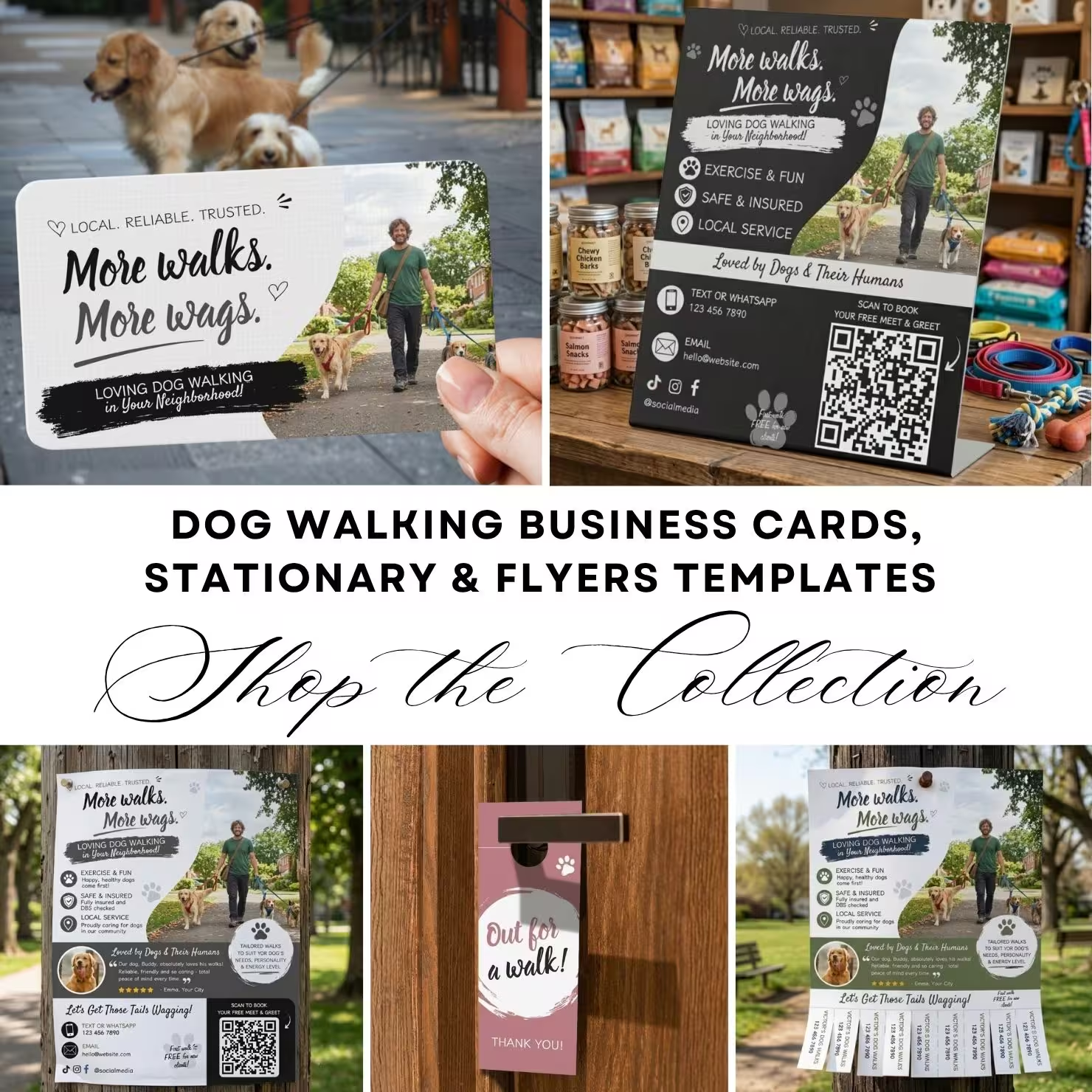
Dog Walking Business Cards, Stationary and Flyer Templates
Create a professional and welcoming dog walking business with this dog walking business cards, stationary and flyers collection, designed to highlight your specialized pet walking services.
Perfect for dog walkers and pet sitters!
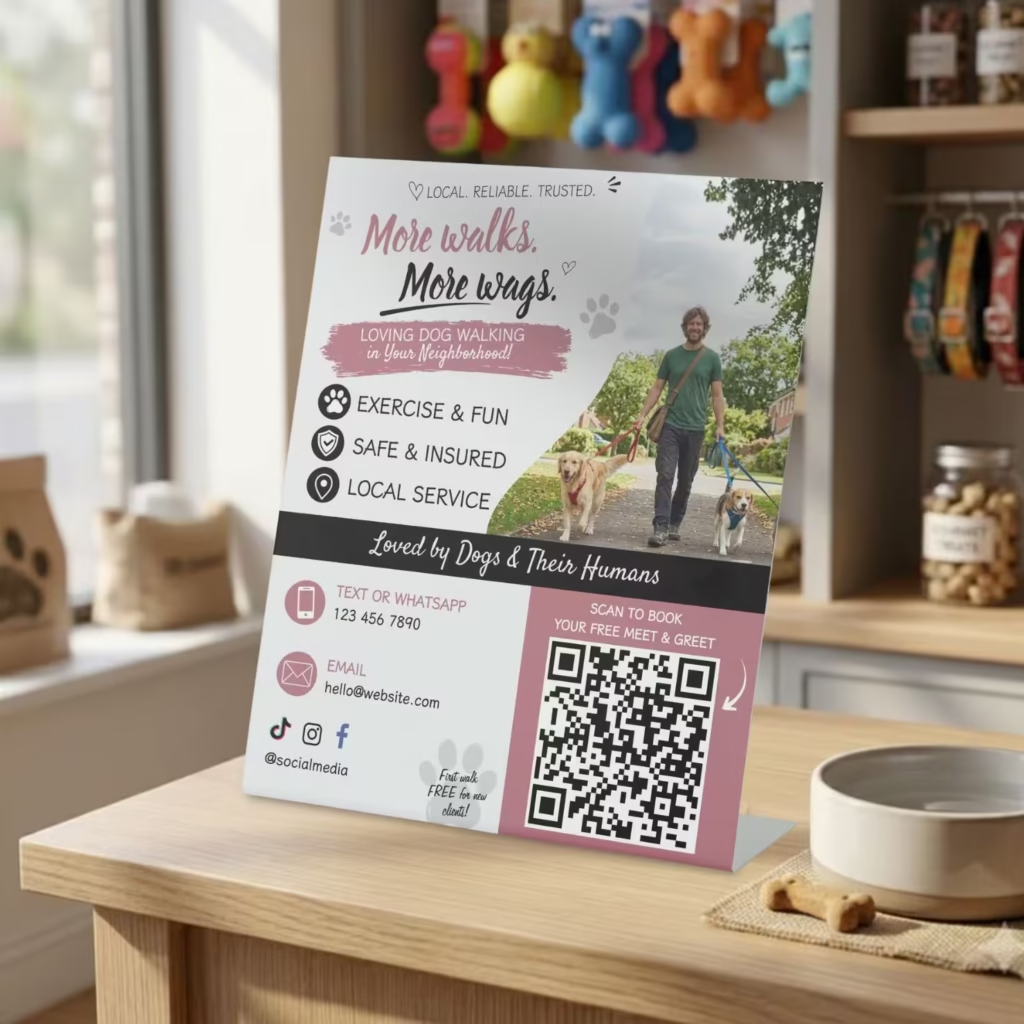
This elegant sign helps communicate your care, expertise, and pricing clearly to clients.
Have you read?
- How Dog Walkers Find Clients in Their Own Neighborhood
- Why Dog Walking Flyers Fail (And How to Fix Yours)
- The Fastest Way to Get Dog Walking Referrals Without Feeling Awkward
- Use the Free Dog Walking Rate Calculator to Set Prices You Are Confident In
- Get the Meet and Greet Checklist Template and walk into every first meeting fully prepared
FAQ: How to Turn Dog Walking Inquiries Into Paying Clients
Within one hour during working hours is the target. If you are out on walks and cannot respond personally, set up an auto-reply on Instagram, Facebook, or your booking platform that acknowledges the message immediately and sets an expectation for when a personal reply is coming. Speed of response is one of the biggest factors in whether a lead converts or moves on to another walker.
Answer the question they asked, add two or three sentences about your service and what makes your approach different, and end with a specific invitation to a next step such as a meet and greet. Keep the tone warm and personal rather than formal and factual. Mentioning the dog’s name or breed if the client included it makes the response feel immediately more genuine.
Yes, and it should be presented as a standard part of your process rather than an optional extra. The meet and greet is your most powerful conversion tool because it allows the potential client to see how you interact with their dog in person, which builds more trust in thirty minutes than weeks of messaging ever could.
Keep the follow-up short, warm, and completely free of pressure. A simple message checking in, expressing continued enthusiasm about the dog, and making it easy for them to re-engage is all it takes. Framing it as checking whether they have any remaining questions rather than asking whether they have made a decision removes almost all of the awkwardness.
The most common reasons are life getting in the way, the decision being lower priority than it felt in the first moment, or the client not knowing exactly what the next step is. A clear, specific follow-up message that reiterates the next action and makes it easy to complete resolves most of these situations. Most cold leads are not lost, they just need a simple nudge.
Yes. Being transparent about your pricing in the first response saves time for both parties and pre-qualifies the lead. A potential client who is comfortable with your rate after reading your first message is already a warmer lead by the time the meet and greet happens. Hiding prices creates friction and can make you seem less confident in the value of your service.
Respond warmly and professionally as you would with any enquiry. Give your price clearly, briefly mention what is included, and invite them to a meet and greet. Some price shoppers become loyal long-term clients once they experience the quality of your service in person. Others will go for the cheapest option regardless. You have no way of knowing which until you give them the opportunity to find out.