
The Fastest Way to Get Dog Walking Referrals Without Feeling Awkward
Most dog walkers would love more referrals, yet few actively ask for them. It is not because they do not see the value. Asking can feel uncomfortable, awkward, or overly sales-focused.
As a result, many rely on happy clients to spread the word on their own. While that sometimes works, it leaves one of the most effective growth opportunities to chance.
The good news is that asking for referrals does not have to feel awkward. With the right timing, approach, and simple system, it becomes a natural part of delivering great service. This guide shows you how to make that happen.
KEY TAKEAWAYS
- Dog walkers often find referrals awkward because they see them as asking for a favour instead of an extension of a service clients already value.
- The best time to request a dog walking referral is immediately after positive feedback or a great walk update.
- Referral cards make referrals easier by giving clients something tangible to share.
- Referral rewards are more effective when they benefit the new client, as people enjoy helping friends.
- Making referrals part of your regular process removes awkwardness and turns them into a natural part of your business.
A dog walking referral strategy is a deliberate, repeatable system for encouraging existing clients to recommend your services to other dog owners in their network.
Unlike passive word of mouth, which happens randomly when a happy client mentions you in conversation, an active referral strategy creates consistent conditions that make recommendations more likely, more frequent, and more likely to result in a booking.
Why Referrals Are the Most Valuable Leads a Dog Walker Can Get
Before getting into the how, it is worth being clear on why referrals deserve to be at the centre of your growth strategy rather than treated as a nice bonus when they happen to occur.
A referred lead arrives at your door completely differently from any other type of enquiry.
They already trust you before the conversation starts because someone they trust has vouched for you.
They are less price-sensitive because the recommendation carries more weight than a price comparison. They are more likely to become long-term clients because the relationship started with social proof rather than a cold search result.
They are also significantly easier to convert. A cold enquiry from a flyer or a Google search requires you to build trust from scratch during a single phone call or message exchange.
A referred enquiry arrives pre-warmed. The trust-building has already been done by your existing client. Your job is simply not to undo it.
Research into service business growth consistently shows that referred clients have higher retention rates, higher average spend, and higher referral rates themselves than clients acquired through any other channel. In other words, referred clients refer more clients. The effect compounds over time.
For a local dog walking business where the entire foundation of the service is trust, this dynamic is even more powerful than in most industries.
The Real Reason Asking for Referrals Feels Awkward
The awkwardness most dog walkers feel when thinking about asking for referrals usually comes from one of three places:
They frame it as asking for a favour. If you approach the referral conversation as “I need more clients and I am hoping you can help me,” it feels transactional and needy. That framing makes both parties uncomfortable.
They choose the wrong moment. Asking for a referral out of the blue, at a routine drop-off, or during a conversation that has nothing to do with the quality of your service, is jarring. It feels like a sales pitch because it is disconnected from anything that would naturally lead to one.
They have no system to support the ask. If asking for a referral means relying on the client to memorise your number, find your Instagram page, and remember to mention you to a friend at some unspecified future point, the ask goes nowhere even when the client’s intentions are good.
All three of these problems are completely solvable. The solution to the first is a reframe. The solution to the second is timing. The solution to the third is a system.
The Reframe That Changes Everything
Stop thinking of a referral ask as asking for a favour. Start thinking of it as giving your client the opportunity to do something genuinely helpful for a friend.
Most dog owners with a great walker have been asked by friends and neighbours “do you know a good dog walker?” If you have not given your clients a simple, easy way to answer that question, you are actually making their life slightly harder. The referral ask is not about your business needs. It is about making it easy for your happy clients to help the people they care about.
When you reframe it this way internally, the conversation shifts completely. Instead of:
“I am trying to grow my business and would really appreciate it if you could recommend me to anyone you know.”
You say something like:
“If you ever know anyone looking for a walker, I would love to help them out. I have a little card here that makes it easy to pass on my details.”
One sounds like a request. The other sounds like an offer. The difference in how it lands is significant.
The Right Moment to Ask
Timing is the most underestimated element of a successful dog walking referral strategy. Ask at the wrong moment and it feels random and awkward. Ask at the right moment and it feels completely natural.
The right moments are always connected to a peak of positive emotion in the client relationship. These are the moments when a client is feeling genuinely good about your service and is most naturally inclined to talk about it.
The best moments to introduce a referral
🟢 Immediately after a client says something positive about your service. When a client sends a message saying “Charlie absolutely loves his walks with you” or “you have no idea how much this helps our week,” that is the moment. Their positive feeling is live and present. Respond warmly, then introduce the referral naturally: “That genuinely means so much to me. If you ever know anyone else looking for a walker, I have a little referral card I can leave with you. There is something in it for them on their first walk.”
🟢 After sending a particularly well-received walk report card. Walk report cards that include a great photo or a funny personal note from the walk consistently generate positive responses from clients. When a client replies enthusiastically to a report card, that is a warm, natural moment to mention your referral offer.
🟢 At the end of the first month with a new client. After four weeks, a new client has seen enough of your service to know whether they love it. A one-month check-in message is a natural point to ask how things are going, and if the response is positive, to introduce the referral.
🟢 At the end of the year or around a holiday period. A short thank-you message to all your clients at the end of the year, expressing genuine appreciation for their loyalty, is a natural place to mention your referral programme without it feeling like a sales push.
Build a Simple Referral System in Three Steps
A system turns an occasional awkward conversation into a consistent, natural part of how you operate. Here is the simplest version that works.
Step 1: Give every client two or three referral cards
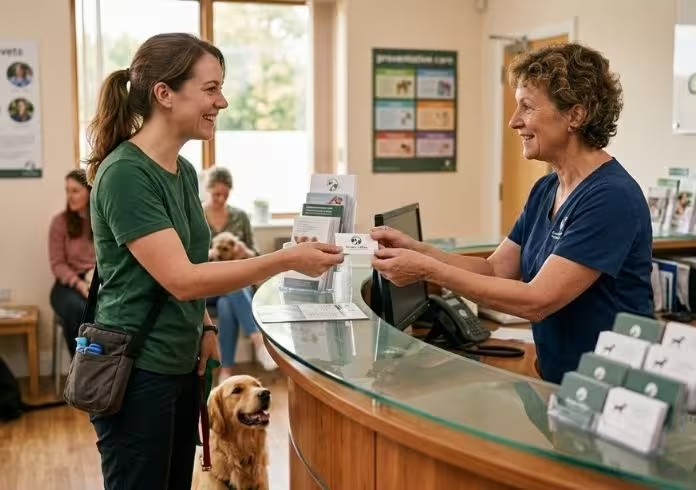
A physical referral card is the most practical and most underused tool in a dog walker’s arsenal. When a client has a card in their wallet with your details, a specific offer for their friend, and a QR code linking directly to your booking page, passing your name along becomes effortless.
Give two or three cards per client rather than one. One card creates pressure, because using it means giving away the only copy. A small stack feels generous and makes sharing feel easy.
Hand them out at the meet and greet, at the end of the first month, or at any moment of positive feedback. Keep a supply with you so you are always ready.
Step 2: Make the incentive about the friend, not just the referrer
Referral incentives that offer a reward to the person doing the referring are common. But they tap into a relatively weak motivation. Most people are mildly pleased by a discount for themselves.
A much stronger motivation is the ability to do something genuinely good for a friend. Structuring your incentive so the primary benefit goes to the new client, for example a first walk free or a discount on their first month, makes the referring client feel generous rather than self-interested. They are not just recommending a service. They are giving their friend a gift.
Your dog walking referral card might read: “Give your friend their first walk on us. Mention this card when they book.”
The referring client can also receive a reward, for example a free walk credit, but lead with the friend’s benefit rather than the referrer’s.
Step 3: Follow up and close the loop
When a new client books and mentions a referral, always let the referring client know. A short, warm message saying “Just wanted to let you know that your friend [name] has booked with us. Thank you so much for the recommendation, your free walk credit has been added to your account” does three things:
- It confirms to the referring client that their recommendation made a difference
- It closes the loop on the reward so they know it has been honoured
- It reinforces positive feelings about your service and makes them more likely to refer again in the future
This follow-up message takes thirty seconds to send and has a disproportionately large impact on the referring client’s relationship with your business.
Beyond Your Clients
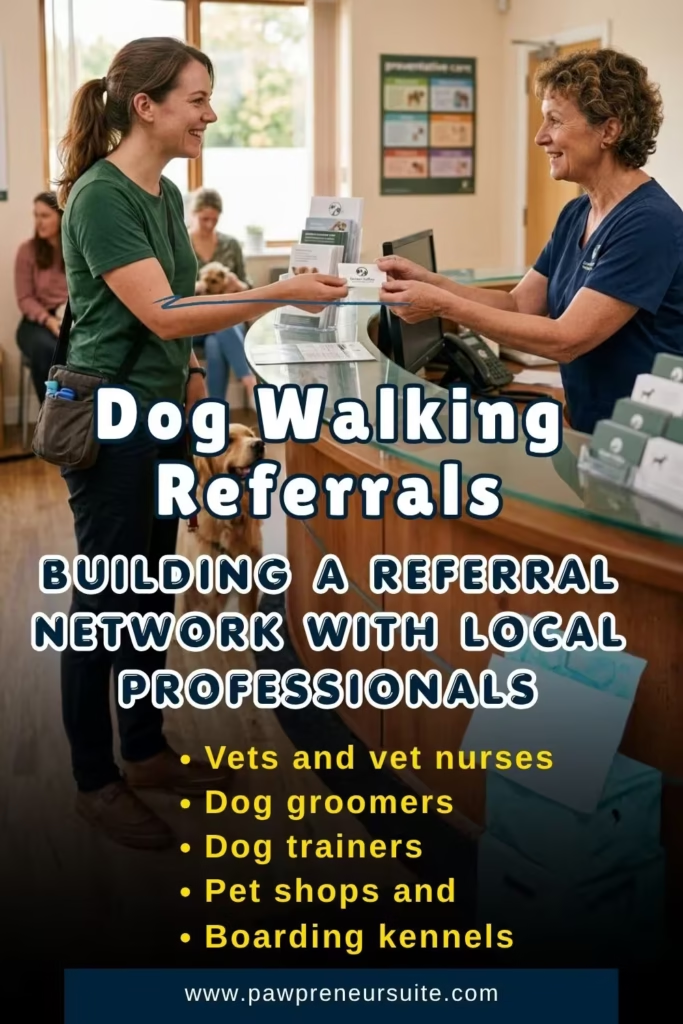
Building a Referral Network With Local Professionals
Your clients are not the only source of referrals. Local pet professionals who serve the same dog-owning audience you do are a powerful and often overlooked referral network.
🟢 Vets and vet nurses
Vet clinic staff are asked for local recommendations constantly. A vet nurse who has met you, knows you are professional and insured, and has your card in the drawer will mention your name without hesitation when a client asks who walks dogs in the area.
Visit local clinics, introduce yourself briefly, leave a few cards, and follow up every couple of months. You are not asking for a formal arrangement. You are simply making sure they know you exist and have a way to pass your details on.
🟢 Dog groomers
Groomers and dog walkers serve the same clients but do not compete with each other. A groomer whose clients are looking for a walker is a natural referral partner. Offer to do the same in return, referring clients who need grooming to the groomers who refer to you.
🟢 Dog trainers
Clients of dog trainers often need a walker who can reinforce the training work being done in sessions. A recommendation from a trainer carries significant weight because the client is already investing in their dog’s development and is primed to take professional advice seriously.
🟢 Pet shops and boarding kennels
Independent pet shops and boarding kennels regularly get asked by customers whether they know a good dog walker. A supply of cards at the counter, combined with a warm relationship with the staff, keeps you in the conversation.
What to Do When a Client Is Happy but Has Not Referred Anyone
Some clients love your service, tell you regularly, but simply have not referred anyone. This does not mean they are unwilling. It often means they have not been given a frictionless way to do it.
A gentle, specific nudge can unlock referrals from clients who have been meaning to recommend you but have not got around to it.
Try something like this in a message or at a drop-off:
“I am so glad it has been working well. I am actually trying to grow a little at the moment and personal recommendations really make a difference for a small business like mine. If you ever think of someone who might need a walker, here are a couple of cards to pass on. No pressure at all, but it would mean a lot.”
The phrase “no pressure at all” is important. It signals that you are not putting the client in an uncomfortable position, which removes the main barrier to them saying yes.
Most clients who hear this and genuinely like your service will actively look for an opportunity to refer you. You have given them permission and the tools to do it. That is often all it takes.
Track Your Referrals So You Know What Is Working
A referral strategy without tracking is a referral strategy running blind. Keep a simple record of:
- Which clients have been given referral cards and when
- Which new enquiries mentioned a referral and who referred them
- Which referrals converted into paying clients
- Which clients have referred more than once, as these are your most valuable advocates and deserve to be treated accordingly
A basic spreadsheet or a notes page in your booking software is enough. Review it quarterly. If referrals are coming from certain clients consistently, nurture those relationships specifically. If certain types of moments or messages are generating more referrals than others, do more of those.
Over time this data tells you exactly where your best clients come from and what conditions produce the most referrals, so you can replicate those conditions deliberately rather than leaving them to chance.
Have you read?
- How to Turn Dog Walking Inquiries Into Paying Clients
- What to Include in a Dog Walking Contract (And Why It Protects You Both)
- How Much Should You Charge for Dog Walking in 2026?
- Use the Free Dog Walking Rate Calculator to Set Prices You Are Confident In
- Get the Dog Walking Referral Card Template and start building your referral system today
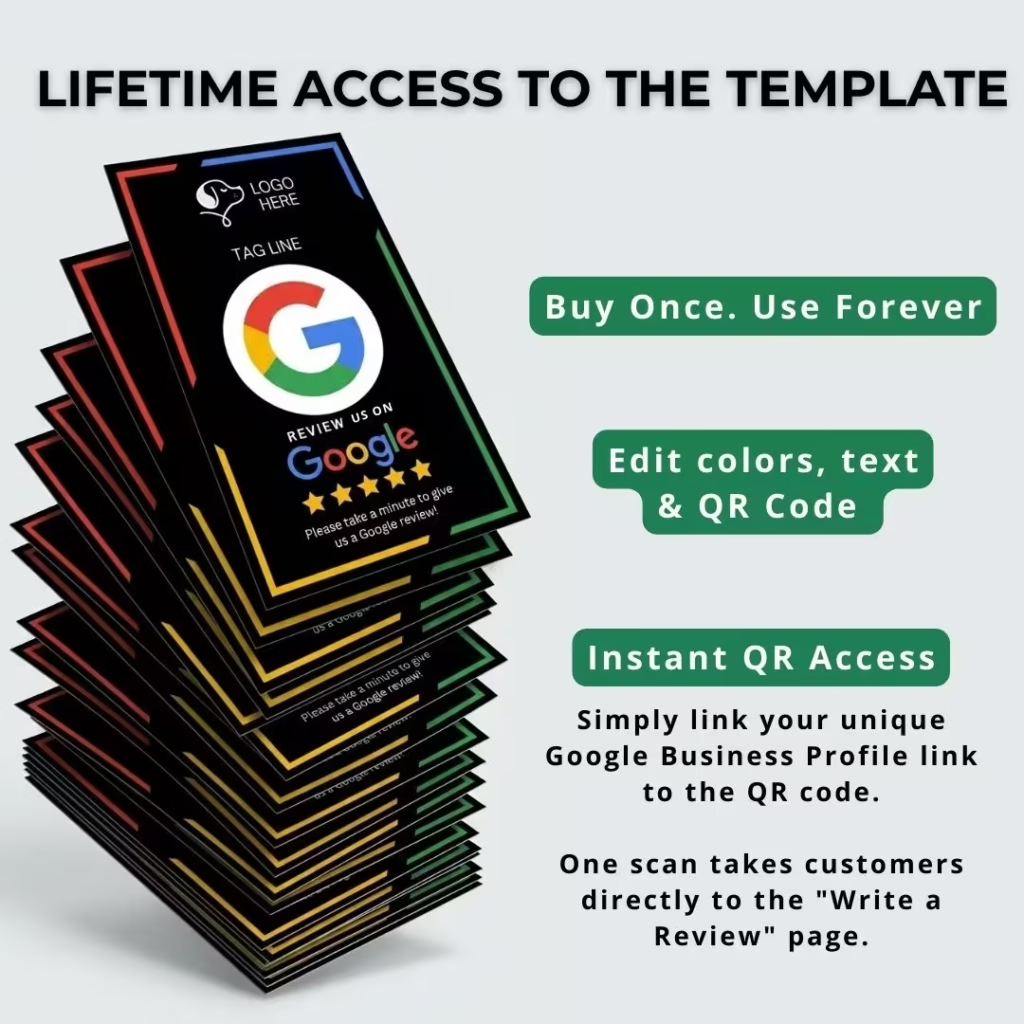
Get More Google Reviews
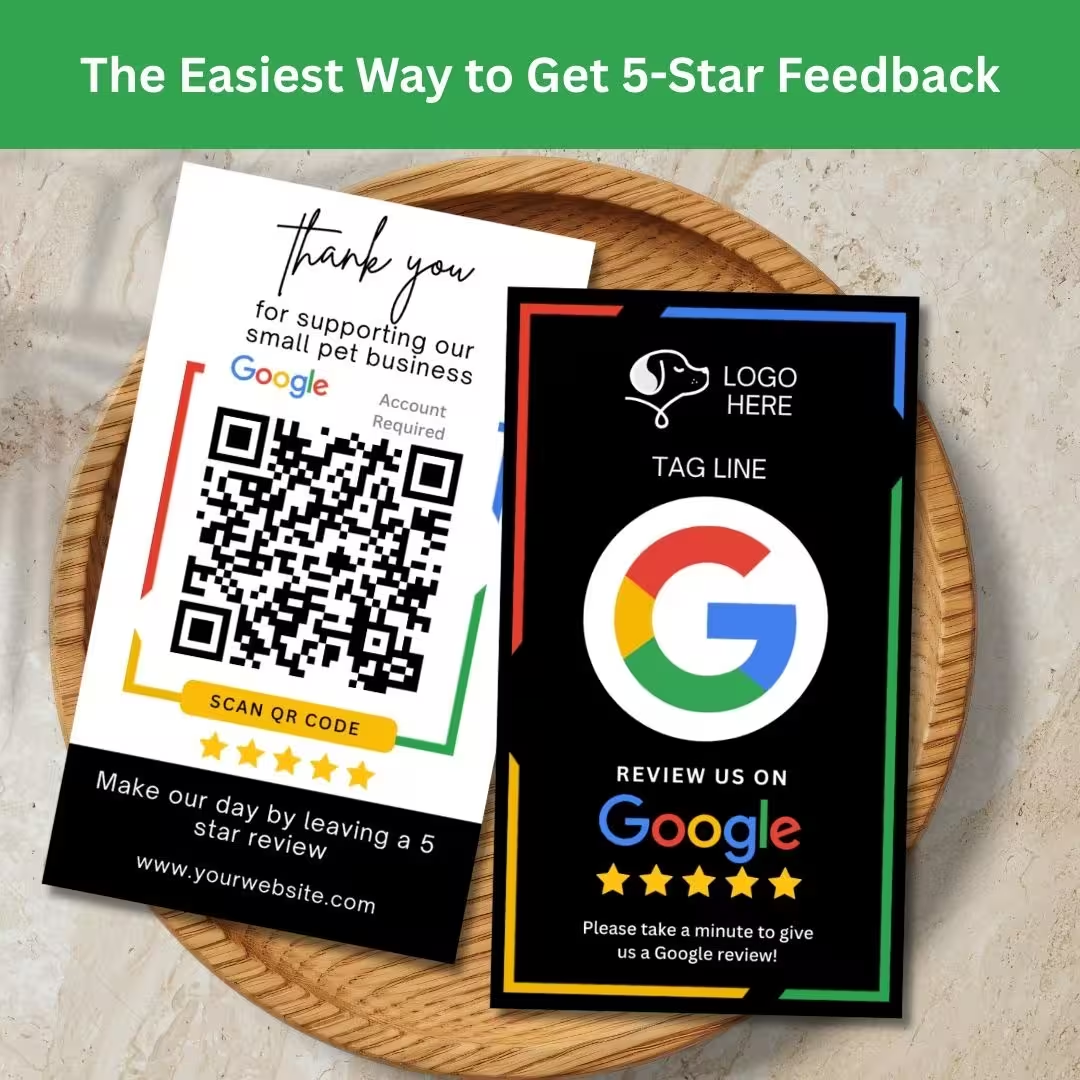
Google Review Request Card with QR Code
Start getting 5 Star reviews for your dog walking services.
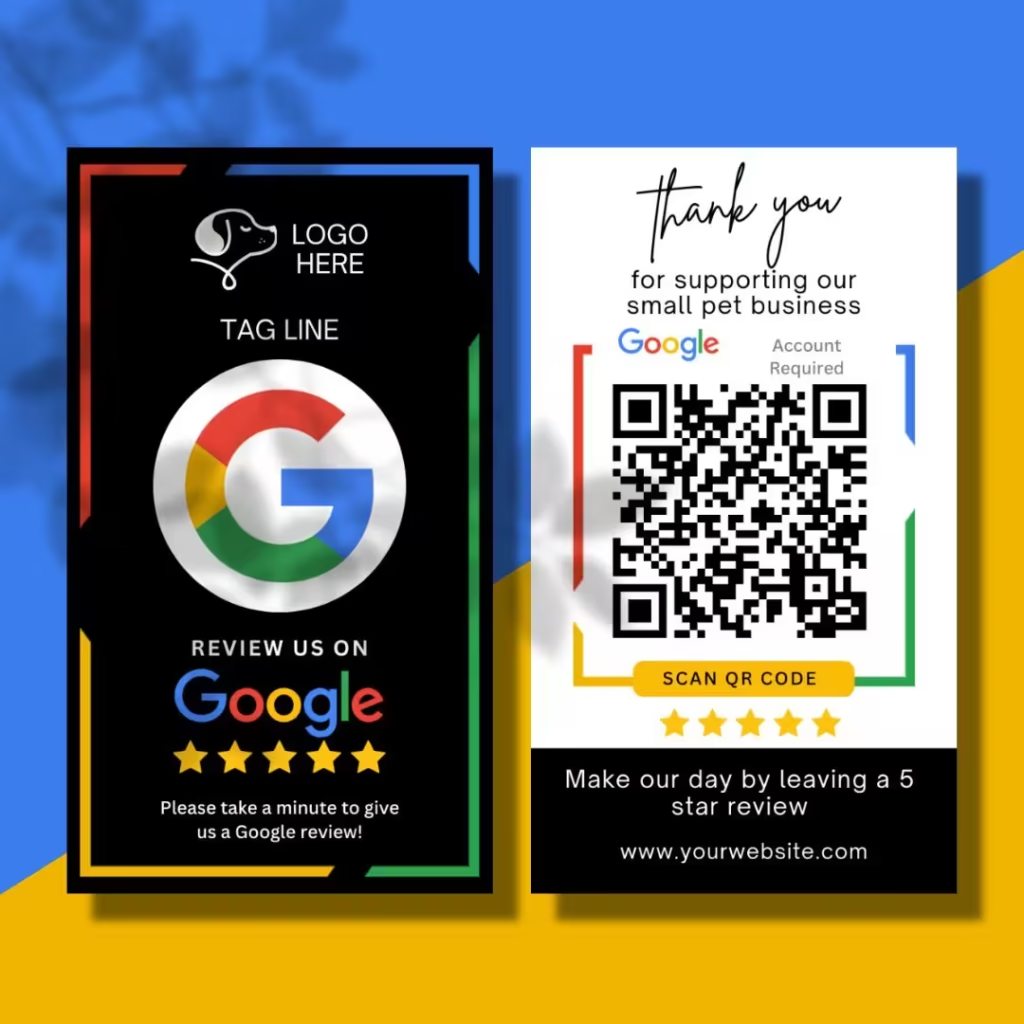
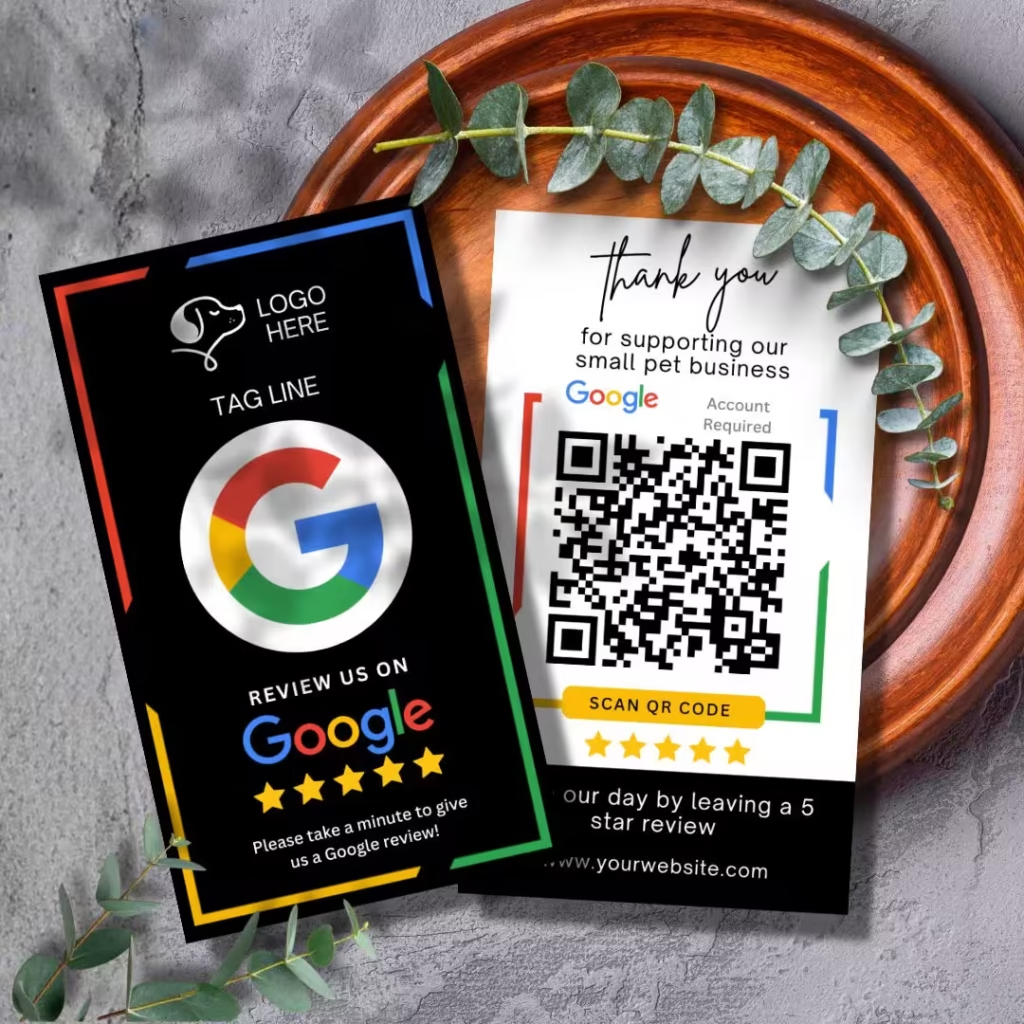
A professional, scan-to-review QR code solution designed for small businesses. Fully customizable in Canva, no design skills required.

FAQ: Asking for dog walking referrals without feeling awkward
The key is timing and framing. Ask immediately after a moment of genuine positive feedback from the client rather than out of nowhere. Frame it as giving them a way to help a friend rather than asking them to help your business.
A physical referral card makes the whole conversation easier because you are offering them something to use rather than making a direct request.
An incentive helps but it does not have to be financial. A free walk credit, a small thank-you gift, or even a handwritten note can be just as effective as a discount.
The most powerful incentive structure leads with a benefit for the new client, for example a first walk free, rather than purely rewarding the referring client, because it gives the referrer the feeling of doing something generous for a friend.
Most clients will refer one to two people over the lifetime of the relationship if they are given a simple way to do it and reminded occasionally.
A small number of highly engaged clients will refer many more. Identifying and nurturing these advocates is one of the highest-return activities in your entire marketing strategy.
First walk free for the new client is consistently the most effective offer because it removes all financial risk from the decision to try your service. For the referring client, a free walk credit works well because it has a clear, tangible value and reinforces their decision to keep using you.
A simple spreadsheet with one row per client and columns for date card given, referral made, new client booked, and reward issued is all you need. Review it monthly and follow up with clients who received cards a while ago but have not yet referred anyone with a gentle, friendly nudge.
For most dog walkers in an established area, yes. Word of mouth combined with a visible local presence, a Google Business Profile, and a small amount of physical marketing like flyers and notice board cards is enough to build a full client list without any paid advertising. The timeline depends on how actively you pursue referrals rather than waiting for them to happen passively.
Avoid asking during a first meeting before the client has experienced your service, during a conversation where a problem or complaint is being discussed, or at a random point with no connection to a positive moment in the relationship.
The referral ask should always feel like a natural next step after something good, never like a script being delivered regardless of context.