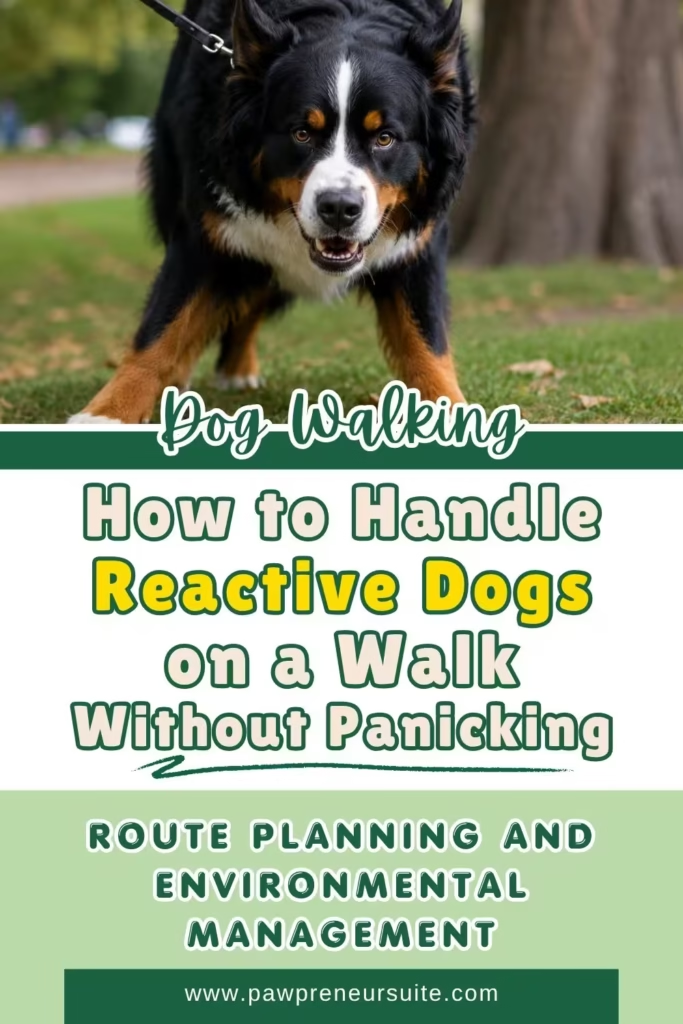
How to Handle Reactive Dogs on a Walk Without Panicking
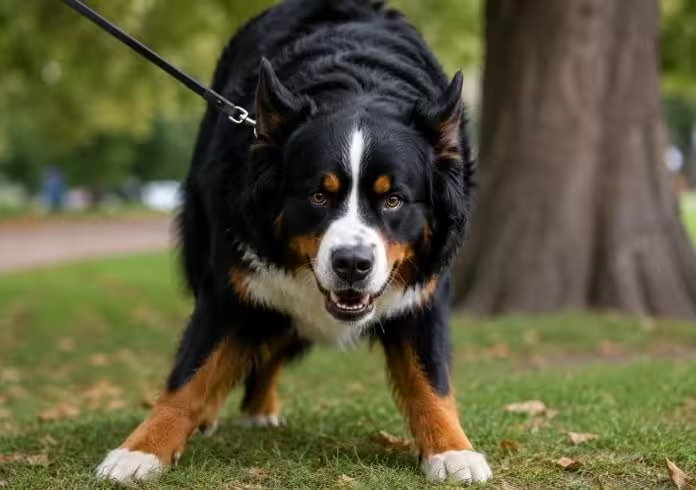
You are halfway through a walk with a dog you have been told is “a little excitable around other dogs.” Everything is going fine until a Labrador appears around the corner forty metres away and the dog on your lead transforms instantly. The barking starts. The lunging begins. Your arm takes the full force of it. Your heart rate spikes. You are not sure what to do next.
If you have been walking dogs for any length of time, you have been in this moment or something close to it. Reactive dogs are far more common than most clients admit in their intake forms, and handling them well is one of the skills that separates a confident, professional walker from one who dreads certain bookings.
The good news is that managing reactivity on a walk is a learnable skill. It does not require a behaviour qualification or years of specialist training to get to a level where you can handle reactive dogs safely and calmly.
It requires understanding what is happening, knowing what to do before the reaction builds, and having a simple, reliable plan for when things get difficult.
This guide gives you exactly that, how to handle reactive dogs on a walk.
KEY TAKEAWAYS
- Reactivity is almost always driven by fear or frustration rather than aggression, and understanding this distinction changes how you respond to a reactive episode on a walk.
- Reading a dog’s early warning signals before a full reaction happens gives you the time and space to intervene calmly rather than reacting after the situation has already escalated.
- Your own emotional state during a reactive episode directly affects the dog’s behaviour, so staying calm and grounded is not just good advice but a practical management technique.
- Route planning, timing, and environment management are your most powerful tools for reducing how often reactive episodes happen in the first place.
- Accepting a booking for a dog you know is reactive without the right information, equipment, and plan in place is a risk to the dog, to the public, and to your professional reputation.
A reactive dog is a dog that responds to specific triggers in its environment with an exaggerated, intense behavioural response.
Common triggers include other dogs, cyclists, joggers, children, traffic, or unfamiliar people. Reactions typically involve lunging, barking, growling, spinning, or pulling hard toward or away from the trigger.
Reactivity is not the same as aggression, although it can look frightening to onlookers.
Understanding Why Dogs React
Before you can manage reactivity effectively, it helps to understand what is actually happening when a dog reacts on a lead.
Most reactive behaviour is not about dominance, aggression, or a dog trying to cause harm. It is most commonly driven by one of two things:
Fear. The dog perceives the trigger as a threat and its stress response kicks in. The barking and lunging is not an attack, it is a distance-increasing behaviour. The dog is saying “go away” as loudly as it can because it does not feel safe.
Frustration. Some dogs are genuinely friendly and want to reach the trigger, another dog, a jogger, a cyclist, but the lead prevents them from doing so. The frustration of being restrained builds and spills over into reactive behaviour. These dogs are often the ones described by owners as “just wanting to play” but who look terrifying when they react.
Understanding which type of reactivity you are dealing with shapes how you manage it. A fear-reactive dog needs more space and a calm, confident handler. A frustration-reactive dog needs redirecting attention and a change of focus before the frustration peaks.
In both cases, knowing the trigger and the pattern is the starting point for managing it well.
Learn to Read the Warning Signs
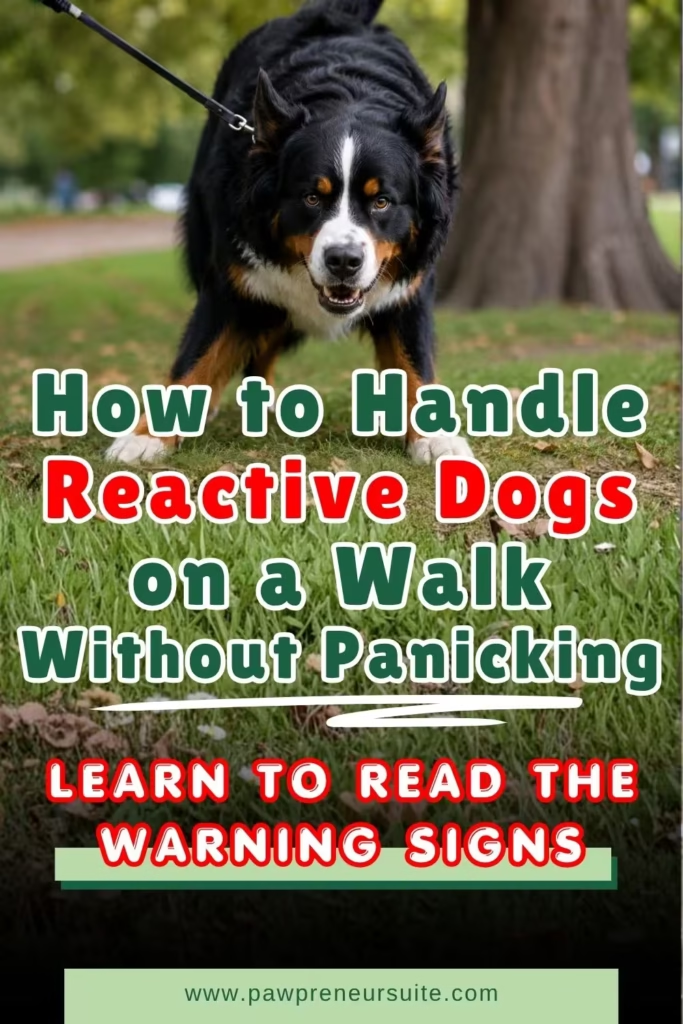
By the time a dog is lunging and barking, it has already been telling you something was wrong for the previous thirty seconds. Most reactive episodes do not appear out of nowhere. They build through a predictable sequence of signals that a trained eye can spot in time to intervene.
Early warning signals to watch for
- Sudden stillness or freezing, the dog stops moving and fixes its gaze on something in the environment
- Ears pricked sharply forward or flattened back depending on whether the response is frustration-based or fear-based
- Tail stiffening or rising
- Body posture shifting forward onto the front feet
- Lips tightening or a subtle change in facial tension
- Hackles rising along the spine
- Breathing becoming faster or shallower
- Attention shifting entirely to the trigger and becoming impossible to redirect with a word or touch
The moment you notice any of these signals is the moment to act. You have a window, often ten to twenty seconds, between the first sign of tension and a full reactive episode. That window is everything.
What to Do When You See the Early Signs
When you notice the early warning signals, your goal is to create distance from the trigger before the dog escalates.
Change direction immediately. Do not wait to see what happens. Turn and walk the other way, calmly and with purpose. A simple U-turn before the dog has fully locked on to the trigger is the most effective intervention available to you.
Use a cheerful interrupter. A happy, upbeat sound or word that the dog has a positive association with can break their focus on the trigger before it fully escalates. Something as simple as a bright “let’s go!” paired with a directional change and a treat can redirect attention before the emotional response builds.
Increase distance. Move to the other side of the road, turn down a different street, or step behind a parked car to break the dog’s line of sight to the trigger. Distance is your most reliable tool. Most reactive dogs have a threshold, a distance at which they can see a trigger without going over the top. Your job is to keep them under that threshold.
Use treats strategically. High-value treats used before the dog reacts, not during, can redirect attention and reinforce calm behaviour near the trigger at a safe distance. Feeding treats during a reaction tends to reward the reactive state rather than interrupt it.
What to Do During a Full Reactive Episode
Sometimes you will not catch it in time. The trigger appears suddenly from behind a fence, around a tight corner, or in a situation where you have no advance warning. The dog goes over threshold and a full reaction is happening.
Stay calm and do not shout. Shouting your dog’s name or using a firm, stressed voice adds to the dog’s arousal rather than reducing it. It communicates that you are also responding to the threat, which makes things worse. Keep your voice low and even.
Do not pull the lead tight and hold. A tight lead creates pressure that most reactive dogs push back against. Instead, use a gentle side-to-side movement to break the dog’s locked forward focus rather than pulling directly backward.
Move the dog away from the trigger. Keep moving. A dog that is moving is easier to redirect than one that is standing and fixating. Encourage forward movement away from the trigger with your body, a treat, or a sound that encourages them to follow you.
Create as much distance as quickly as possible. The reactive episode will reduce in intensity as distance from the trigger increases. Your goal is to get far enough away that the dog drops back below threshold, then continue the walk in a calmer state.
Stay upright and balanced. It sounds basic but a dog in a full lunge can pull a walker off their feet if they are caught off balance. Keep your feet apart, your weight centred, and both hands on the lead. Never wrap the lead around your hand or wrist as this can cause injury if the dog pulls suddenly.
Route Planning and Environmental Management
The best reactive dog management happens before the walk begins, not during it.
Know your routes. Walk the same routes regularly enough to know where the common trigger points are. A dog that is always walked past a fence with a barking dog behind it is going to react at that fence every single time. If you can avoid it, avoid it.
Walk at quieter times. If a dog you manage has a known reactivity issue, shift their walk to quieter times of day where possible. Early morning or later in the afternoon tends to mean fewer dogs, cyclists, and joggers than peak midday or post-work periods.
Use quieter environments. A reactive dog walked through a busy park on a Saturday morning is set up to fail. The same dog walked through quieter residential streets or a less popular green space has a completely different experience.
Check the forecast. Windy days increase sensory stimulation for dogs and can raise the general arousal level of dogs that are already sensitive. If you know a dog is reactive, a particularly stimulating environment combined with strong wind is worth factoring into your route and timing decisions.
Equipment That Makes a Difference
The right equipment does not solve reactivity but it makes managing it significantly safer and more effective.
A well-fitted harness with a front-clip attachment. A front-clip harness redirects the dog toward you when they pull forward rather than allowing them to build momentum in the direction of the trigger. It is one of the most practical pieces of equipment for reactive dog management.
A double-ended lead. A lead that clips to both the front and back of a harness gives you more control and more options for directional guidance than a standard single-clip lead.
A properly fitted collar as a backup. Always walk a reactive dog with a collar and tags in addition to the harness, so there is a secondary attachment point if the harness fails or the dog slips out of it.
High-value treats. Carry something the dog genuinely loves on every walk. Not just their standard kibble but something that cuts through high arousal such as small pieces of cooked chicken or cheese. Treats are a management tool, not a bribe, and having them ready makes the difference between redirecting a dog in an early warning stage and losing the window entirely.
Know When to Decline or Flag a Booking
Not every reactive dog is a dog you should be walking solo, particularly not early in your professional development or without the right equipment and information.
Before accepting a booking for a dog with known reactivity:
- Make sure the owner has been completely honest about the triggers, the severity, and the dog’s history
- Complete a thorough meet and greet and observe the dog’s behaviour yourself rather than relying solely on the owner’s description
- Make sure you have the right equipment before the first walk
- Consider whether the dog should be introduced to your route with the owner present for the first walk before going solo
- Be honest with the owner and yourself about whether this dog is within your current level of experience
Declining a booking because a dog is beyond your current skill level is not a failure. It is a professional judgment that protects the dog, the public, and your business. Recommending the owner work with a qualified behaviourist before the dog joins your walks is a responsible and genuinely helpful response.
Sources:
- Reactive dogs: why it happens and how to help. DogTrust UK
- Reactivity and aggression in dogs. Animal Humane Society

Google Review Request Card with QR Code
Start getting 5 Star reviews for your dog walking services.
A professional, scan-to-review QR code solution designed for small businesses. Fully customizable in Canva, no design skills required.




⚠️ Professional Caution for When Handling Reactive Dogs
Reactive or aggressive dogs can escalate quickly if their warning signals are ignored. Never force interactions, rely on outdated dominance techniques, or place yourself in a situation where you feel unsafe.
Prioritize safety, maintain appropriate distance, use suitable equipment, and seek support from the owner or a qualified behavior professional when needed. Your safety and the dog’s welfare should always come first.
FAQ: Handling Reactive Dogs on a Walk
Reactivity and aggression can look similar from the outside but they are different things. A reactive dog is responding to a trigger with an exaggerated emotional response, most commonly rooted in fear or frustration, that is out of proportion to the actual threat. An aggressive dog has intent to cause harm. Many dogs that appear aggressive in public are actually reactive, but if a dog has a documented history of biting or causing injury it requires specialist behaviour support beyond standard dog walking management techniques.
Yes, always. Brief, factual, and non-alarming walk report notes that mention any reactive episodes, what the trigger was, how severe the reaction was, and how it was managed keep the owner informed and help them work with a trainer if needed. Hiding reactive episodes to avoid an uncomfortable conversation is not in the dog’s best interest and can leave you exposed if a more serious incident occurs later.
In most cases, no. Reactive dogs are significantly better managed on solo walks where the walker can give their complete attention to reading the dog and managing the environment. A reactive dog in a group walk creates risk for the other dogs, for other members of the public, and for the walker who cannot give full attention to any one dog. Be honest with clients about this when discussing their options.
A well-fitted front-clip harness, a double-ended lead, a backup collar with tags, high-value treats, and your phone with the owner and emergency vet contact details saved. Some walkers also carry a pet-safe citronella spray as an emergency deterrent if another dog approaches off lead, but check your local regulations before carrying one.
Be honest, kind, and specific. Explain what you observed during the meet and greet or on recent walks, describe the specific situations that are presenting a management challenge, and frame your recommendation around the dog’s welfare rather than your own difficulty. Suggesting that the owner work with a qualified behaviourist as a next step, and that you would be happy to revisit the booking once some of that work has been done, is a professional and genuinely helpful response.
Yes, and you should. A reactive dog requires more preparation, more attention, more skill, and more physical effort than a non-reactive dog of the same size. A temperament handling surcharge for dogs that require additional management is legitimate, professionally standard, and should be communicated clearly before the first walk.
Yes, if you are regularly walking reactive dogs or want to offer this as a specialist service. A canine first aid course is the minimum baseline for any professional walker. Adding a fear-free handling course, a dog behaviour fundamentals course, or a specific reactive dog management workshop significantly improves your ability to manage these dogs safely and adds credibility to your professional profile.